Why Summer Is Hard on Concrete in Texas
Concrete expands and contracts with temperature. In Tomball, summer surface temperatures on a concrete driveway can exceed 150°F on a clear day — well above the ambient air temperature. That thermal stress, combined with the heavy spring rains that precede it, creates two specific threats:
- Water intrusion: Spring rains push moisture into existing cracks. When summer heat arrives suddenly, that moisture evaporates fast and can cause spalling or widen cracks from the inside out.
- UV degradation: The sun's UV rays break down the surface paste of concrete over time, making it more porous and susceptible to staining and scaling.
Addressing both before peak summer is the smartest maintenance investment you can make.
Step 1: Walk the Slab and Inspect Carefully
Before doing anything else, do a full walk of every concrete surface — driveway, patio, sidewalk, garage floor. You're looking for:
Cracks
Note the width and whether there's any vertical displacement (one side higher than the other). Hairline cracks under 1/4 inch with no vertical shift are fillable. Anything wider, or with offset edges, warrants a professional evaluation before you seal over it — sealing a structurally active crack traps moisture and makes the problem worse.
Spalling or Surface Scaling
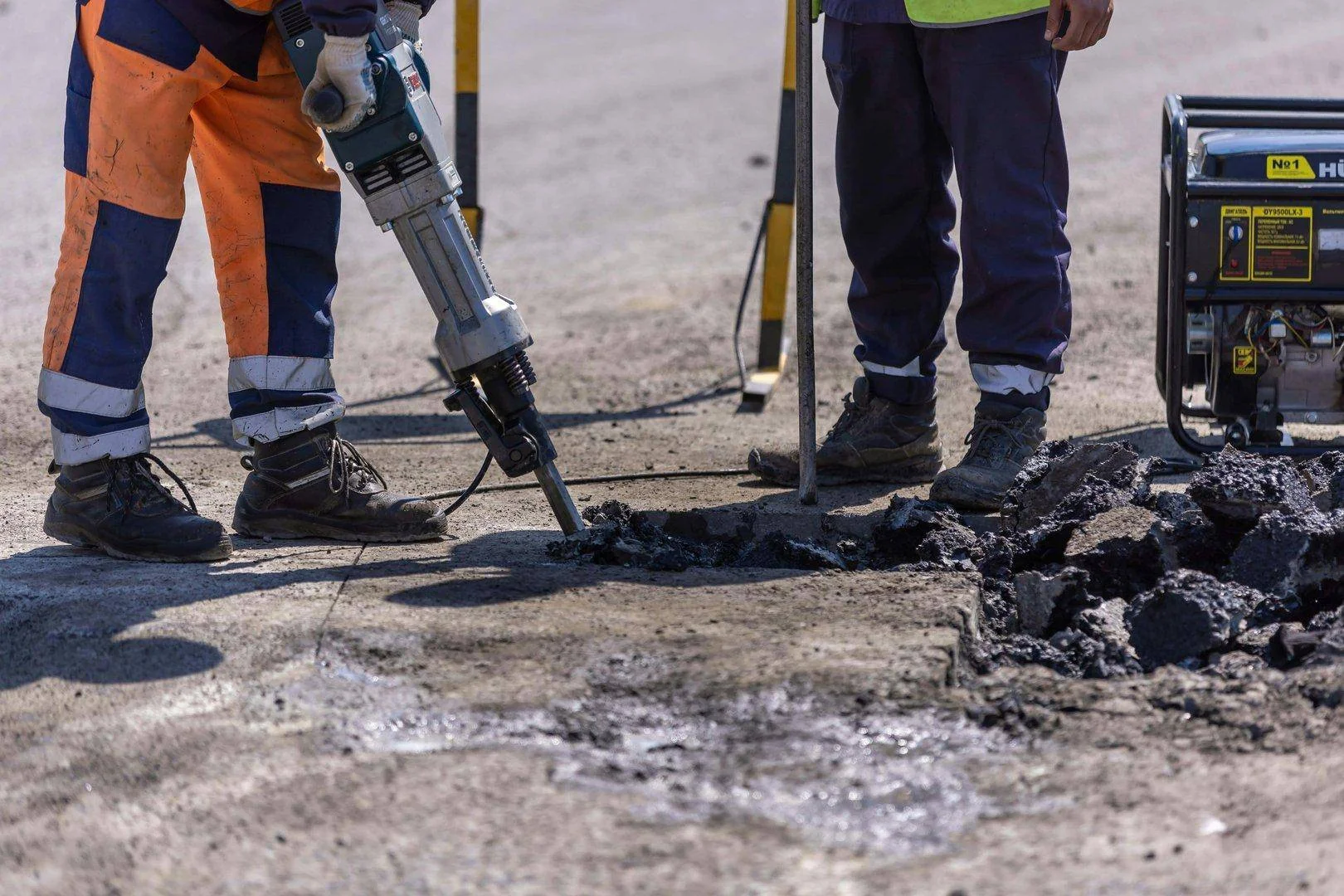
Look for areas where the top surface layer is flaking, pitting, or peeling. Small isolated patches can be resurfaced. If you're seeing it across 20–30% or more of the surface, a full assessment is worth scheduling before the heat makes working conditions miserable for crews.
Joint Sealant Condition
Control joints and expansion joints should be filled with flexible sealant, not left open or cracked. If the sealant is hard, cracked, or missing entirely, water is getting under the slab. This is one of the most common causes of settlement and heaving in North Houston's clay soils.
Drainage and Pooling
After a rain, check where water sits. Water that pools against your foundation or along the edge of a slab is actively undermining the sub-base. Regrading or adding a drain before summer storm season is worth serious consideration.
Step 2: Clean Before You Seal
If you're planning to apply a sealer — which we recommend every 2–3 years for residential concrete in this climate — surface prep is everything. Sealer applied over dirt, algae, or efflorescence won't bond and will peel within a season.
For most residential driveways and patios, a pressure wash at 2,500–3,000 PSI with a concrete degreaser handles most surface contamination. Let the slab dry completely — typically 48–72 hours in May humidity — before applying any sealer.
Step 3: Choose the Right Sealer
Not all sealers are the same. For outdoor flatwork in Texas, the two most practical options are:
Penetrating Silane/Siloxane Sealers
These soak into the concrete and repel water without changing the surface appearance. They're the best choice for driveways and sidewalks where you want protection without a glossy finish. They won't peel, don't need to be reapplied as often, and hold up well to UV exposure.
Acrylic Topcoat Sealers
These form a surface film that enhances color and gives a wet or semi-gloss look. Good for decorative concrete and stamped patios where appearance matters. They require more frequent reapplication (every 1–2 years) and can become slippery when wet unless you add an anti-slip additive.
Step 4: Fill Cracks and Re-Caulk Joints
With the surface clean and dry, fill any eligible cracks using a polyurethane or epoxy crack filler rated for exterior use. For control and expansion joints, cut out the old sealant with an oscillating tool and replace it with a self-leveling polyurethane joint sealant. This is straightforward DIY work for most homeowners.
If you find cracks that are actively widening, have significant vertical offset, or run in a spiderweb pattern, stop and call a professional. Those are signs of sub-base movement that surface repair won't fix.
Step 5: Consider Shade and Surface Temperature
If you're planning any new concrete work — a patio extension, a new driveway section, or a sidewalk — May is one of the last good months to pour before summer. Concrete placed in direct sun when air temperatures are above 90°F requires special hot-weather precautions: chilled mix water, accelerated finishing schedules, and curing blankets to prevent premature moisture loss. Any reputable contractor in Tomball will account for this, but it's worth confirming before you sign a contract.
Quick May Concrete Checklist
| Task | DIY or Pro? |
|---|---|
| Walk and inspect all concrete surfaces | DIY |
| Pressure wash driveway and patio | DIY |
| Fill hairline cracks under 1/4 inch | DIY |
| Re-caulk open or failed control joints | DIY |
| Apply penetrating sealer | DIY |
| Wide cracks, vertical displacement, spalling | Pro assessment |
| Settlement or drainage issues | Pro assessment |
| New concrete pours before summer heat | Pro |
Get a Free Assessment Before Summer
If your walkthrough turns up damage you're not sure how to categorize, we're happy to take a look at no charge. We serve Tomball, Spring, Cypress, Magnolia, The Woodlands, and Conroe. Call (346) 589-8600 or request an estimate online — scheduling fills up fast once the heat arrives.
Free Pre-Summer Concrete Assessment
Catch problems now before summer heat turns small repairs into full replacements.
Request Free Assessment (346) 589-8600