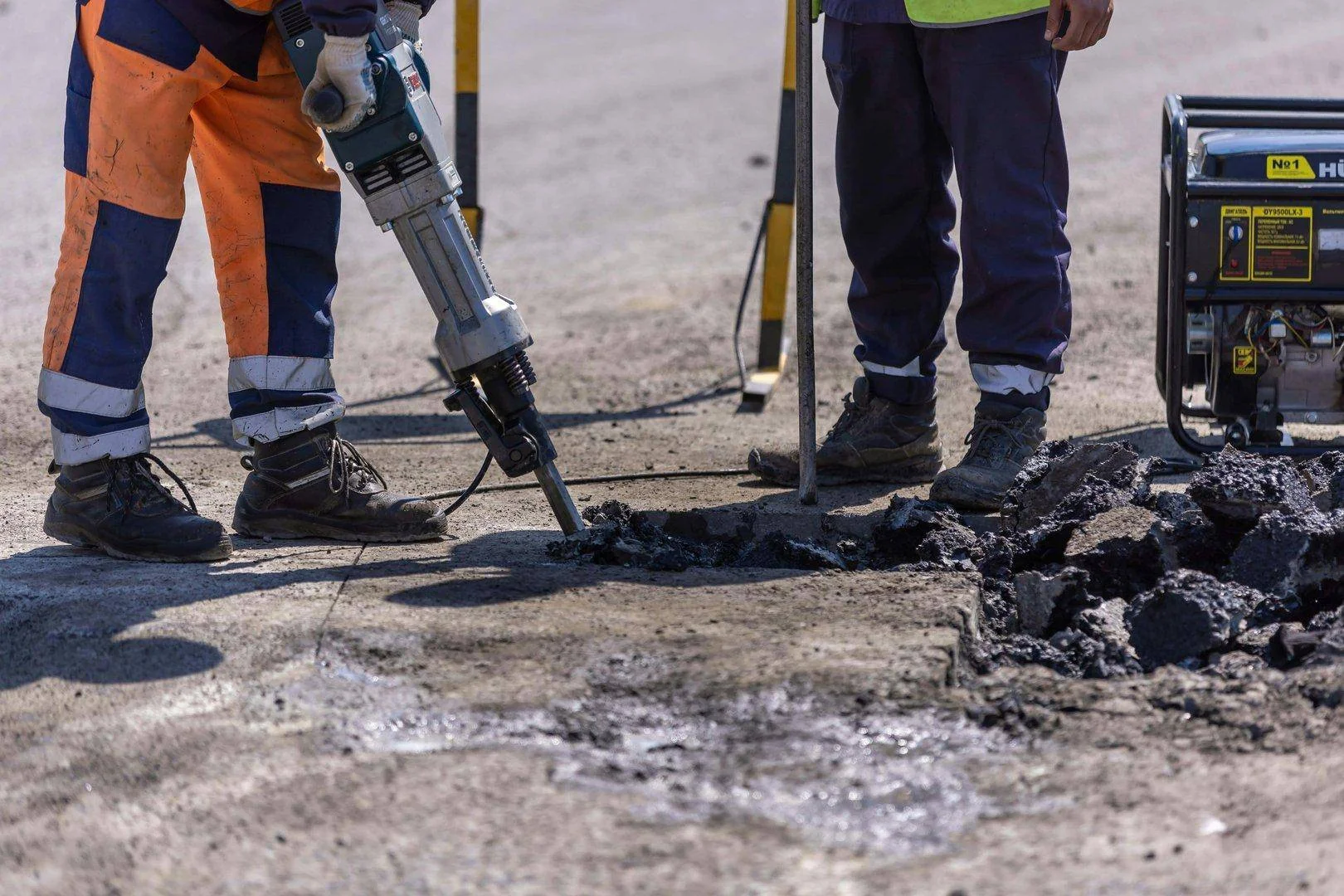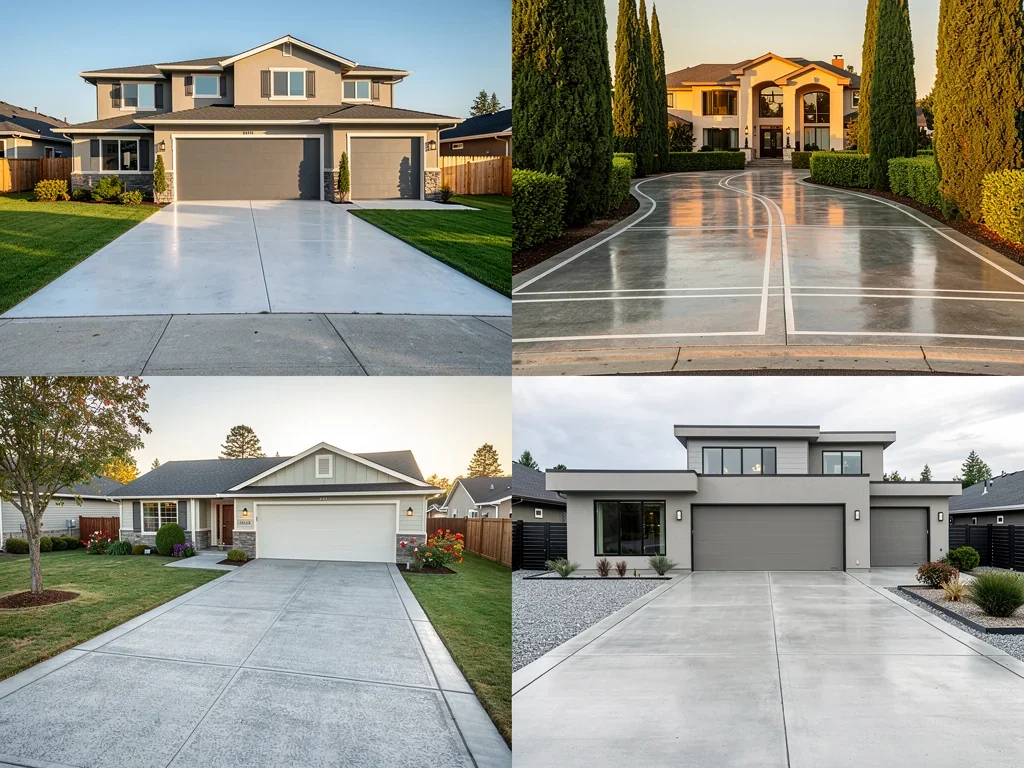
Concrete Is Tough — But Not Bulletproof
A properly installed concrete driveway in the Tomball area can last 30–50 years. But that lifespan assumes the concrete isn't being attacked by things most homeowners never think about. The damage is usually slow and invisible at first — and by the time you notice it, it's already expensive.
Here are five of the most common culprits we see on the job, and exactly what you can do about each one.
1. Fertilizer Runoff From Your Lawn
This one catches almost everyone off guard. Many commercial lawn fertilizers contain ammonium sulfate or ammonium nitrate — both of which react chemically with the calcium hydroxide in concrete. The result is a slow surface breakdown that looks like the top layer is flaking or dissolving.
If your sprinkler system regularly washes fertilizer across the edge of your driveway, you're accelerating surface degradation without realizing it. The fix is simple: redirect sprinkler heads away from the concrete and rinse the slab down after any fertilizer application near the edges.
2. Pressure Washing on the Wrong Setting
Pressure washing feels satisfying — but blasting concrete with too much PSI (over 3,000) or holding the nozzle too close actually strips the cement paste from the surface. That paste is what holds everything together. Once it's gone, the aggregate beneath becomes exposed and the surface becomes rougher, holds more dirt, and deteriorates faster.
For routine cleaning, 1,500–2,500 PSI with a wide-angle nozzle (25–40 degrees) is plenty. Keep the wand moving and stay at least 12 inches from the surface. A mild detergent does more work than raw pressure.
3. Parking in the Same Spot Every Single Day
This surprises people because concrete seems like it should handle a parked car just fine — and it can. But repeatedly parking heavy vehicles in the exact same spot concentrates load stress on the same section of slab day after day, year after year. Over time, especially if the base beneath has any soft spots, you'll see a network of hairline cracks radiate out from that area.
If you drive a heavy truck, SUV, or work van, consider varying where you park on the driveway. For commercial vehicles or RVs, a 5–6 inch slab with rebar is worth the upfront cost — a standard 4-inch residential pour isn't designed for that load frequency.
4. Standing Water Along the Edges
The edges of a concrete slab are its most vulnerable point. Water that pools along the perimeter — from poor yard grading, clogged gutters, or downspouts aimed at the driveway — seeps under the slab through the edges. Once beneath the concrete, that water softens the base material. When the base goes soft in spots, the slab loses support and starts to crack or settle.
In the Houston area, where we get heavy rain events and clay-heavy soils that don't drain well, this is one of the leading causes of premature driveway failure. Make sure your yard slopes away from the driveway, and keep gutters clear so downspouts discharge well away from the slab edge.
5. Thin Concrete at the Apron
The apron is the section of driveway that connects to the street — it's also where most cracks start. Why? Because this is the transition zone between your privately poured slab and the city's curb cut, and it's where heavy vehicles (delivery trucks, garbage trucks, moving vans) cross every time they pull onto your property.
Contractors who cut corners often pour the apron thinner than the rest of the driveway to save on material. Four inches is the minimum for the main slab — but the apron should be 5–6 inches and reinforced with rebar or wire mesh. If your current apron is cracked and the rest of the driveway is fine, a thin or unreinforced apron is usually why.
What to Do If You're Already Seeing Damage
If you've caught any of these issues early — surface scaling, edge cracking, or apron damage — there's a good chance repair is still the right move. Small cracks filled promptly stay small. Surface scaling caught before it spreads can often be addressed with a quality resurfacer.
But if damage is widespread, or sections have shifted vertically, replacement is usually more cost-effective than trying to patch a failing slab. See our full guide on when to repair vs. replace your concrete to help you decide.
Building a New Driveway? Start Right.
The best defense against all five of these problems is a proper installation from the start — the right thickness, a well-compacted base, correctly spaced control joints, and a quality sealer applied within the first year. We've been doing this in Tomball and the surrounding area since 2015, and we stand behind every pour we make.
Call us at (346) 589-8600 or request a free estimate online — no pressure, no obligation.
Concerned About Your Driveway?
Serving Tomball, Spring, Cypress, Magnolia, The Woodlands & Conroe, TX
Request Free Quote (346) 589-8600